Flickcore.us: Why People Stay Fascinated by Ancient Rome — and What That Means

Flickcore.us: Why People Stay Fascinated by Ancient Rome — and What That Means
Introduction
People still talk about Ancient Rome — a civilization that died nearly two millennia ago — as if it were yesterday. The fascination isn’t just about ruins or heroic tales. For many, Rome is a mirror of our present, a cautionary tale about what happens when power, wealth, and ambition meet collapse. The interest is real. In 2025, as societies across the world struggle with instability and rapid change, understanding why Rome captivates us feels more urgent than ever. This article digs into why the world remains drawn to Ancient Rome — and what it tells us today.
Historical Background: What Was Ancient Rome?

-
Ancient Rome was once a vast empire — with far-reaching territories, building marvels like aqueducts, roads, amphitheaters, and a complex social and political structure. (Fox News)
-
Alongside grandeur: there was slavery, massive inequality, political tension, and societal complexities. (Wikipedia)
-
Over centuries, Rome rose and fell. It was once powerful, wealthy, well organized — yet ultimately collapsed. That collapse resonates down through time.
Understanding Rome shows us both human heights and human failings. That duality makes it endlessly interesting.
Key Events and Timeline: Rise, Glory, and Fall
-
c. 753 BCE — Traditional founding of Rome (legendary origin).
-
27 BCE — Beginning of the Roman Empire under Augustus; Rome becomes a major imperial power.
-
1st–2nd centuries CE — Period of Rome’s greatest expansion, architectural and engineering feats, cultural and political dominance across the Mediterranean.
-
Throughout Empire — Slavery and social stratification shaped daily life; vast public works built by slaves and laborers. (Wikipedia)
-
Later centuries — Internal decay: economic strain, political instability, social inequality, decadence among elites. (Wikipedia)
-
Eventual decline — The empire, once mighty, fragmented and collapsed. What looked permanent turned fragile. That collapse fascinates historians and regular people alike.
Turning Point: The decline — when the empire proved that even greatness isn’t forever.
That decline changed everything. It shifted Rome from symbol of power to cautionary legend.
Expert Opinions & Modern Analysis


-
Some scholars argue that part of the fascination stems from Rome being “foreign and familiar.” The stories, the architecture, the drama — they feel like myth, but also like echoes of modern life. (ABC)
-
Others warn against glorifying Rome just for its grandeur. The same empire introduced slavery, inequality, violence, and oppression. (Wikipedia)
-
For many, Rome’s story serves as “a warning and a lesson”: wealth and power may shine now — but collapse remains always possible. As actress Sara Martins recently put it, “people are fascinated because the Roman Empire died.” (Cinema Express)
-
With the rise of digital media and streaming, newer retellings of Rome — in shows, films, books — help keep its memory vivid. This prompts fresh debate: What parts do we celebrate? Which do we learn from?
Public Reaction & Cultural Buzz
-
Recently, a social-media craze asked men how often they think about Rome. The trend highlighted public fascination, sparking jokes, memes — but also deeper interest. (Iowa Now)
-
On Reddit and history forums, many argue: interest in Rome doesn’t equal support for its darkest aspects. It can come from genuine curiosity, respect for its complexity, and a hunger to learn. For example:
“For me, as someone with a degree with Anthropology, it’s truly a goldmine … you can study the way different levels of society interacted with each-other.” (Reddit)
-
Others push back: they worry some fascination skews toward romanticising power, dominance, and violence — forgetting slavery, oppression, inequality. (Reddit)
In 2025, as people face social and political instability worldwide — economic inequality, climate change, cultural clash — the story of Rome seems to echo louder.
New Discoveries & 2025 Relevance
-
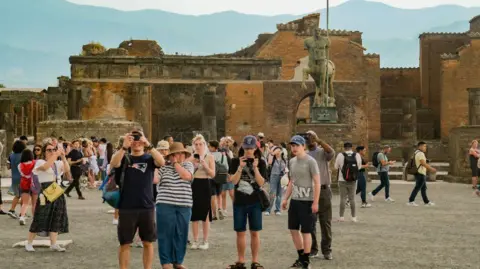
Historians and archaeologists continue to uncover artifacts, inscriptions, and social-history details that deepen our understanding of Roman daily life — not just emperors and wars, but workers, slaves, immigrants, and ordinary families.
-
Modern media retellings — TV series, streaming dramas — now try to show Rome’s diversity: different cultures, languages, social classes. This helps break the myth of a simplistic, uniform “Roman world.” For example, Martins’ character in Those About to Die is immigrant-origin and speaks a constructed dialect to highlight the multicultural nature of Rome. (Cinema Express)
-
In 2025, people studying governance, collapse, and social cohesion — in political science, sociology, climate policy — use Rome as a case study: A once-great empire that failed. That history helps ask: how can modern societies avoid similar traps?
Long-Term Impact: Why Rome Still Matters
-
Rome influences modern laws, urban planning, architecture, languages, governance. Many systems today trace roots back to Roman ideas. (rsc.org.uk)
-
Its story reminds us: no empire is too large, no power too stable. Collapse can come — if inequality, corruption, social neglect grow.
-
For individuals: studying Rome can teach empathy and complexity. The empire included rulers — but also workers, slaves, immigrants. Complex humans with real lives, not just history’s heroes or villains.
-
As global society faces uncertainty — climate, migration, political shifts — Rome acts as both inspiration and warning.
Behind-the-Scenes: How Modern Media Reinterprets Rome
-
Many productions now avoid glorifying only the elite. They attempt to show everyday lives: the poor, the enslaved, the immigrants — as real people with struggles and hopes. (The National)
-
Costumes, language, set design often aim for authenticity. As Martins said, stepping onto the set of Those About to Die felt like walking through stones and streets that reminded her of an old city — a reminder that some things human-built never change completely. (Cinema Express)
-
That realism helps modern audiences connect: not as when-upon-a-time legends — but as messy, real people whose stories still speak to ours.
Frequently Asked Questions
Q: Why are people so fascinated with Ancient Rome in 2025?
Because Rome represents both dramatic achievement and dramatic collapse. Its mix of power, culture, engineering, social complexity and eventual downfall resonates with many people. We see in Rome a reflection: greatness, fragility — and a lesson for our time.
Q: Is the fascination only about violence and conquest?
Not always. Yes, wars and conquests draw attention. But many people study Rome for its art, law, engineering, daily life, multicultural society, social structure. These aspects show Rome had many colors, not just swords and battles.
Q: Doesn’t romanticizing Rome ignore slavery and suffering?
That risk exists. Scholars and critics warn against selective glorification. Rome had slavery, inequality, brutal politics. If we forget that, we risk repeating the same mistakes. Many modern works try to show all facets of Roman life.
Q: Can modern societies learn from Rome’s fall?
Yes. Rome reminds us that even powerful civilizations can collapse if social inequality, corruption, or neglect grow unchecked. For societies today facing instability — climate, migration, political polarisation — Rome is a cautionary tale.
Q: Why do modern movies and shows about Rome keep being made?
Because Rome offers powerful stories: drama, ambition, diversity, human conflict. Also, it connects with modern concerns — identity, power, collapse, survival. That makes it relevant, always.
Conclusion
The story of Ancient Rome still matters — not because it’s distant, but because its echoes are alive. The fascination isn’t empty nostalgia. It’s a search for meaning: glimpses of greatness, warnings of collapse, reflections of ourselves. As actress Sara Martins said: we look at Rome because “the Roman Empire died.” That death teaches us to value what we build, to question where we’re headed, to remember that even the grandest empires can fall.
Do you think the mystery of Rome’s collapse is fully solved? Comment below — and share this to show it still matters. For more stories like this, check out other documentary-style articles on Flickcore.us.


